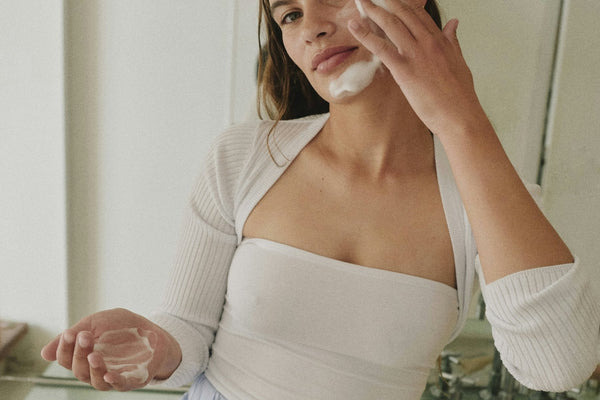

How to Remove Red Marks on Your Face: Causes, Treatments & Tips
The mark a breakout leaves behind isn't 'just discolouration' — red marks alone come in several forms, from post-inflammatory erythema to broken capillaries, and each needs a different approach. This guide breaks down what's actually causing your red marks, the ingredients that fade them fastest, and the routine that stops new ones forming in the first place.
 8 min read
Most red marks settle with the right ingredients — but most people use the wrong ones, irritate their skin, and stretch the timeline by months. Here's the routine that actually works.
THE CALMING ROUTINE FOR POST-ACNE MARKS AND THE LOOK OF REDNESS
What's actually causing your red marks?
Before you spend money on serums, work out what type of redness you're looking at — the wrong products can keep you going in circles for months.
Post-inflammatory erythema (PIE)
The most common cause. Flat pink-to-red marks left behind after acne, picking or a flare-up settles. The surface of the skin is intact, but the small blood vessels underneath are still dilated. PIE tends to fade with time, and a gentle routine built around niacinamide, azelaic acid and vitamin C helps the skin look more even while it does.
Broken capillaries
Tiny visible blood vessels, usually around the nose, cheeks or chin. Linked to sun exposure, hot showers, alcohol, vigorous scrubbing or genetics. These won't fade with topical skincare alone — a dermatologist is the right person to tell you what is and isn't possible. A calming routine is still worth keeping, so you're not provoking the skin further.
Rosacea
Persistent flushing across the central face, sometimes with bumps that look like acne. Heat, spicy food, alcohol, stress and UV are common triggers. Rosacea is a medical diagnosis, so it belongs with your doctor or pharmacist rather than with a shopping basket. Alongside their advice, gentle barrier-supporting skincare and a daily mineral SPF keep skin more comfortable day to day.
Barrier damage and irritation
Increasingly common — over-exfoliation from too many actives, retinol layered with acids, harsh fragrance, or over-cleansing. The fix is the opposite of what most people try: simplify the routine to a gentle cleanser, ceramide moisturiser and SPF for 2 weeks before reintroducing anything active.
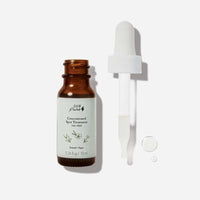
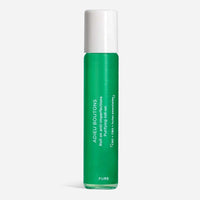


Azelaic acid is one of the few ingredients that softens the look of post-acne marks and the appearance of redness at the same time — up to 10% over the counter, higher only on prescription.
The ingredients that actually fade red marks
Skincare for redness is one of the rare categories where a small number of ingredients do almost all the work. Build your routine around these:
+ Niacinamide (5%) — helps skin look calmer, supports the barrier and softens the look of PIE. The most universally tolerated active.
+ Azelaic acid (up to 10%) — the most underrated ingredient in skincare. Helps even out the look of leftover marks and the appearance of redness on skin that also breaks out. Higher strengths are prescription-only in the EU, and a decision for your doctor rather than a shelf purchase.
+ Vitamin C (10–15% L-ascorbic acid) — brightens the look of lingering pigmentation and adds daytime antioxidant support against the UV that makes marks look darker. It sits under your SPF, never instead of it.
+ Centella asiatica (cica) — a botanical that visibly softens the look of redness within hours. Look for serums with at least 1% madecassoside.
+ Tranexamic acid (2–5%) — worth trying on stubborn darker marks that won't shift with niacinamide alone.
+ Ceramides & panthenol — the barrier essentials. Without a comfortable, well-supported barrier, none of the actives above get a fair run.
Avoid (or pause) anything with fragrance, denatured alcohol high in the ingredient list, physical scrubs, lemon juice, baking soda and toothpaste. All of these are routinely recommended online and all of them make red marks look worse.
Skipping SPF makes red marks look darker and keeps them hanging around for months. UV is the single biggest reason a routine doesn't seem to be working.
The routine that actually fades red marks
Morning
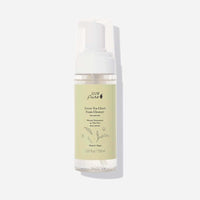
1 - Gentle cleanser — fragrance-free, pH-balanced, no foaming surfactants if your skin is reactive.
2 - Vitamin C serum (10–15%) — on dry skin, wait 1–2 minutes before the next step.
3 - Niacinamide 5% serum (can be combined with vitamin C in a single formula).
4 - Ceramide moisturiser — barrier first, always.
5 - Mineral SPF 30+ with zinc oxide — non-negotiable. UV makes red marks visibly darker.
Evening
1 - Gentle cleanser (double cleanse if you wore SPF or makeup).
2 - Azelaic acid (up to 10%) 2–3 nights per week.
3 - Retinol 1–2 other nights per week, once your barrier is calm (start with 0.025%).
4 - Calming serum with centella, panthenol or madecassoside on the non-active nights.
5 - Rich moisturiser with ceramides and squalane.
Keep the routine boring for 4 to 8 weeks. The biggest mistake people make is layering on new products every week and never giving anything time to work.


Mistakes that are stretching your timeline
1. Picking, scrubbing or "stimulating" the marks
Every time you pick, scrub with a physical exfoliant or "stimulate" the area with a dermaroller, you reset the clock. Marks that would have settled in six weeks turn into six-month sagas.
2. Layering too many actives at once
Vitamin C plus acids plus retinol plus benzoyl peroxide is a fast route to a compromised barrier. Pick two actives, alternate them on different days, and add anything else only after 4 weeks of clear, calm skin.
3. Skipping sunscreen because you "stay inside"
UV reaches through windows and makes marks look darker. Mineral SPF every morning, indoors or out, is the single biggest thing you can do.
4. Using hot water on the face
Hot showers and steaming hot water make redness look more obvious. Use lukewarm water for cleansing and rinse with cool water at the end.
5. Quitting too early
Most people notice a difference around week 4 to 6. If you quit at week 2 because nothing visible has changed, you're stopping just before the point where it starts.
Home remedies — what actually works
Not all DIY is junk. These are low-risk, genuinely pleasant additions:
+ Cool green tea compress — cool, quiet and comforting on skin that feels hot. Brew, chill, soak a cloth, apply 10 minutes.
+ Pure aloe vera gel (no fragrance, no dye) — takes the heat out of skin that feels tight and leaves it feeling more comfortable.
+ Colloidal oatmeal in cleansers or masks — a long-standing choice for skin that feels itchy and looks irritable. It leaves skin feeling softer.
+ Manuka honey mask — cushioning and comforting on skin that looks red and feels sore after a breakout. 15 minutes, rinse with lukewarm water.
Skip the lemon juice, vinegar, baking soda, toothpaste, garlic, and turmeric paste — they're abrasive, pH-disruptive, or pigment-staining and will make red marks look worse.
When to see a dermatologist
If you've stuck to a calming, consistent routine for 3 months and red marks haven't budged, or if you see visible broken capillaries, persistent flushing, or pustules, book an appointment with a dermatologist or speak to your pharmacist. This is the point where professional advice is worth far more than another serum. A dermatologist can look properly at what's happening, tell you whether it needs medical attention, and talk you through the in-clinic and prescription options that simply aren't available over the counter. Going early isn't an overreaction — it's the shortcut.
Frequently Asked Questions
Most come from post-inflammatory erythema (left over from acne), broken capillaries from sun exposure or pressure, rosacea, or barrier damage from over-exfoliation. Each looks different and calls for a different approach — and rosacea is one for your doctor.
Post-acne marks usually look noticeably softer within 4 to 8 weeks of consistent care. Deeper or darker marks can take 3 to 6 months. Rosacea is a medical diagnosis, so that one belongs with your doctor rather than a shopping basket.
Azelaic acid is the most studied, at up to 10% over the counter — higher strengths are prescription-only in the EU. Pair it with niacinamide and vitamin C for fuller coverage.
Yes, cautiously. Start at low strength two nights a week and only after your barrier is calm.
Green tea, aloe, colloidal oatmeal and manuka honey are pleasant, low-risk additions. Skip lemon, baking soda, vinegar, toothpaste and turmeric paste.
If marks persist after 3 months, if you see broken capillaries, or if redness comes with burning, swelling or pustules.
The routine that delivers consistent fading
Red marks settle with patience, consistency and the right four-or-five ingredients — not a cupboard full of products. Build the routine around niacinamide, azelaic acid, vitamin C, ceramides and SPF; give it 4 to 8 weeks before judging; and resist the urge to "do more" when progress feels slow. If puffiness, tired eyes or darkness around the eye area are part of your picture, our under-eye patches guide and eye cream technique guide pair well with this routine.