

The Natural All-Purpose Cleaner Guide: How to Choose a Non-Toxic Home Cleaner
Clean living doesn't stop at the bathroom cabinet. What "non-toxic" really means, the ingredient families worth leaving out, how to read a cleaning label in two minutes, and an even-handed take on making your own versus buying well.
 8 min read
Feeling reassured by a leaf on the label is not the same as being reassured by the formula. One is design. The other is evidence.
CLEAN LIVING, NOT JUST CLEAN BEAUTY
What "non-toxic" actually means — and what it doesn't
Let's be precise, because the word gets stretched. "Non-toxic" is a marketing term, not a legally defined standard — there is no single regulator who signs off on it. That doesn't make it meaningless, but it does mean the burden of proof sits with the ingredient list, not the front of the bottle.
When we talk about a genuinely non-toxic all-purpose cleaner, we mean something specific: a formula built on plant- or mineral-derived ingredients, transparent about what's inside, and free from the substances most consistently flagged by independent bodies as irritants or environmental persisters.
Feeling reassured by a leaf on the label is not the same as being reassured by the formula. One is design. The other is evidence.
One useful thing for anyone shopping in the EU or UK: detergent labelling rules mean fuller ingredient information is usually available from the manufacturer, often on their own website. So even when the physical label is vague, the information often exists. You just have to know what you're looking at.
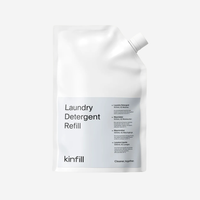
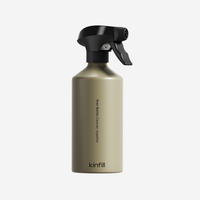


Vagueness is information. It tells you exactly where a brand's transparency stops.
The ingredients worth leaving out
You don't need to memorise a chemistry textbook. A handful of ingredient families come up again and again in independent guidance. Here's what to watch for, and why.
+ "Fragrance" or "parfum" as a single word. This is the big one. A manufacturer can list many undisclosed compounds under that single term. Some are perfectly benign; the problem is you can't tell. If a brand is confident in its scent, it will tell you what's in it — or scent with named essential oils instead.
+ Ethoxylated surfactants. These are cleaning agents whose manufacturing can leave a by-product called 1,4-dioxane, which independent guidance flags as worth avoiding. They rarely appear by that name. The tell is ingredients ending in "-eth", such as sodium laureth sulfate or laureth-6.
+ Quaternary ammonium compounds, or quats. Common in antibacterial sprays, and associated with respiratory irritation for sensitive users. Look for names ending in "-onium chloride".
+ Chlorine bleach (sodium hypochlorite) and ammonia. Effective, but harsh — and genuinely dangerous when accidentally combined, as the mix releases toxic fumes. A natural surface cleaner shouldn't need either for everyday work.
+ Phthalates, parabens, triclosan and formaldehyde-releasers. Frequently cited in non-toxic cleaning guidance as ingredients to avoid, though they appear far more often in personal care than in surface cleaners.
If this list feels familiar, it should. Many of the same names show up in cosmetics — the overlap isn't a coincidence; it's the same industry logic of cheap, shelf-stable, strongly scented.
Never combine vinegar with bleach. It is the one kitchen-cupboard mistake that is genuinely dangerous rather than merely ineffective.
What to look for instead
A good natural all-purpose cleaner is not defined only by what it leaves out. Here's the positive checklist.
+ Plant-based surfactants. These are the workhorses that cut grease. Names like coco-glucoside and decyl-glucoside are derived from coconut and corn, and are gentle on surfaces. Many are certified readily biodegradable, so check the brand's own documentation rather than the word on the front. This is where cleaning power comes from — not fragrance, not colour.
+ Simple mineral helpers. Baking soda for gentle abrasion and deodorising; citric acid or acetic acid, meaning vinegar, for cutting limescale and grime. Cheap, and about as transparent as an ingredient gets.
+ Named essential oils rather than blanket "fragrance", if scent matters to you.
+ Full ingredient transparency. The single most reliable green flag. A brand that lists everything, in plain terms, has nothing to hide.
+ Third-party certification. Because "natural" on its own means little, credible independent marks do the verifying for you. In the EU and UK, look for the EU Ecolabel, Ecocert, Nordic Swan, or Leaping Bunny for cruelty-free — and look each one up to check what it actually covers. A logo you can verify beats an adjective you can't.



How to read a cleaning label without a chemistry degree
Most cleaning labels break into four parts: directions, warnings, ingredients and disposal. For our purposes, three quick habits do most of the work.
1 - Scan for the vague words first. "Fragrance" or "parfum", "surfactants" with no specifics, "colourant". Vagueness is information — it tells you where the transparency stops.
2 - Check the website, not just the bottle. Fuller ingredient information is often published online even when the physical label is thin. Two minutes on your phone in the aisle settles most questions.
3 - Look for a real certification mark, then verify it. A genuine EU Ecolabel or Ecocert logo is registered and searchable. A generic green swirl that says "eco" is not.
That's it. You don't need to fear every long word — plenty of safe ingredients have intimidating names. You need to notice where a brand chooses to be specific and where it chooses to be vague.
Making your own, or buying well: the honest comparison
The internet is full of two-ingredient miracle recipes, and there's real merit in them. But let's be even-handed, because both routes have a place.
Making your own is genuinely cheap, endlessly transparent — you literally measured every ingredient — and satisfying. A spray of diluted white vinegar with a little plant-based soap and a few drops of essential oil handles a great deal of everyday surface cleaning.
The honest caveats: vinegar shouldn't be used on natural stone like marble or granite, because the acid etches it; homemade blends are not disinfectants; and they don't keep as long as a stabilised formula. Never, ever combine vinegar with bleach.
Buying a well-formulated cleaner wins on consistency, convenience, performance the maker has tested across surfaces, and — with the right brand — third-party proof you don't have to generate yourself. The catch is that green store-bought products vary enormously; some still hide irritants behind soft branding. Which loops us right back to reading the label.
Our honest position: make your own for the simple everyday jobs you feel confident about, and buy a genuinely transparent cleaner for everything else. It's not a purity contest. It's about knowing what you're using either way.
The Botā view
Botā began with the belief that you deserve to know what you're putting on your body. Extending that to what you clean your home with isn't a stretch — it's the same principle finishing its sentence.
A truly clean home is one where the products earn your trust through transparency, credible ingredients and independent proof, not through a reassuring colour palette.
As we grow into a broader clean-living platform, our standard doesn't change: values-led, evidence-first, and honest about what we don't yet know. We curate the home category the way we curate everything — by what's genuinely inside, verified.
Frequently Asked Questions
For everyday grease, dust and grime, plant-based surfactants do the job well. The difference shows with disinfection — killing specific viruses and bacteria — which is a job for a product authorised as a disinfectant under the European biocides rules. For ordinary daily cleaning, a well-formulated plant-based cleaner is usually all you need.
No — "non-toxic" is not a regulated term on its own. The reassurance comes from the ingredient list and credible third-party certifications like EU Ecolabel or Ecocert, not from the phrase itself. Treat the words as a starting point and the evidence as the answer.
Almost, but not quite. Diluted white vinegar is a brilliant, cheap natural surface cleaner for glass, tiles and general grime — but avoid it on natural stone such as marble or granite, and never mix it with bleach. For those surfaces, a pH-neutral plant-based cleaner is the safer choice.
It can cover a large number of individual compounds listed under one word. Many are harmless, but you cannot tell which from the label alone. Brands confident in their scent name the essential oils they use, or leave the product unscented.
The same principle, finishing its sentence
You already read the back of the bottle in your bathroom. Doing the same in the kitchen cupboard costs you two minutes and changes what you bring into the house for good — no purity contest, no panic, just knowing what you're using.