

Hyaluronic Acid: The Complete Guide for Every Skin Type
Hyaluronic acid can quietly backfire. It holds up to 1,000 times its weight in water — but depending on one detail of how you apply it, it either pulls moisture into your skin or draws it up from the deeper layers and lets it evaporate, leaving you tighter than before. Here's the single condition that decides which way it goes, where it has to sit in your routine, and what has to go on top.
 10 min read
Hyaluronic acid holds 1,000 times its weight in water — but most people apply it wrong and DEHYDRATE their skin. Here's the right way.
THE COMPLETE HYALURONIC ACID GUIDE FOR EVERY SKIN TYPE
What hyaluronic acid actually is
Hyaluronic acid is a naturally-occurring molecule (a glycosaminoglycan, technically) found throughout your body. Your skin contains roughly 50% of your body's total HA, where it provides the hydrated, plump scaffolding that keeps skin looking young. As you age — from your late 20s onwards — your skin's natural HA production declines by roughly 1% per year. By age 50, you have around half what you had at 25.
Topical hyaluronic acid in skincare works as a humectant: it pulls water into the skin from the deeper layers (or from the air around you, in humid environments). A well-formulated HA serum:
+ Increases skin moisture content immediately upon application.
+ Plumps the skin's surface, softening the appearance of fine lines within minutes.
+ Improves skin elasticity over weeks of consistent use.
+ Supports the natural skin barrier by maintaining hydration.
+ Reduces the appearance of pores and texture.
The key distinction: topical HA hydrates the surface and upper dermis. Injectable HA (fillers like Juvederm or Restylane) restores volume in deeper tissue. Both work, but they're not interchangeable — topical for daily care, injectable for structural change.
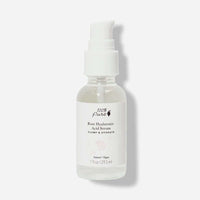


Apply hyaluronic acid to DAMP skin and immediately seal with moisturiser. On dry skin in dry air, HA pulls water OUT of your skin — the opposite of what you want.
The three molecular weights of hyaluronic acid
Hyaluronic acid comes in three molecular sizes, each penetrating to different skin depths:
High molecular weight HA (1,000–1,500 kDa)
The largest molecules. Sit on the skin's surface, hold water there, give immediate plumping. Best for surface hydration and the dewy "glow" effect.
Medium molecular weight HA (50–300 kDa)
Penetrates the outer layers of the skin. Provides longer-lasting hydration. Most balanced option for daily use.
Low molecular weight HA (less than 50 kDa)
The smallest molecules. Penetrate deepest into the skin's upper dermis. Provide the most significant hydration depth and anti-ageing benefit — but can be slightly irritating to very sensitive skin.
The best HA serums combine all three ("multi-weight" or "poly-molecular" HA) for hydration at every skin depth. Look for "low, medium and high molecular weight hyaluronic acid" or specific kDa values on the label. Brands using just one weight (typically high molecular only) deliver surface hydration but not the deeper plumping effect.
Look also for sodium hyaluronate — the salt form of hyaluronic acid. More stable, often used interchangeably with HA on labels. Equally effective.
Look for multi-weight HA serums that combine high, medium and low molecular weights — hydration at every skin depth, not just the surface.
How to apply hyaluronic acid (and the mistake that dehydrates skin)
The single biggest hyaluronic acid mistake: applying HA serum to DRY skin in a DRY environment. HA is a humectant — it pulls water from wherever water is available. On dry skin in dry air, it pulls water from your skin's deeper layers OUT to the surface, where it evaporates. The result: skin that feels tighter and looks more dehydrated than before. The fix is simple but counterintuitive.
Correct application:
1 - Cleanse face. Don't fully dry — leave skin damp.
2 - Apply 2 to 3 drops of HA serum to the still-damp face. Press in.
3 - Immediately follow with a moisturiser to seal the water in. The moisturiser is non-negotiable when using HA.
4 - If your environment is very dry (winter heating, plane, air-conditioned office), spray a hydrating mist over the HA before the moisturiser to give it additional water to draw on.
5 - Apply SPF in the morning, facial oil at night, over the moisturiser.
For maximum effect: layer HA serum over a hydrating toner or essence first — the HA pulls that water into the skin AND from the deeper layers, multiplying the hydration impact.
Frequency: HA is one of the few actives safe to use morning AND night, every day, without irritation risk. The more consistent the application, the more compounding the hydration effect.


Hyaluronic acid for every skin type
Hyaluronic acid is one of the few skincare actives that genuinely suits every skin type — but the formulation and application method should be tailored.
Oily and acne-prone skin
Use lightweight HA serums or gels (avoid heavy creams with HA, which can feel oily). HA hydrates without adding oil, which actually helps reduce sebum production over time. Apply on damp skin, follow with a lightweight gel moisturiser.
Dry skin
Multi-weight HA serums combined with rich ceramide moisturisers. Layer a hydrating mist between the HA and moisturiser for maximum water lock-in.
Combination skin
Lightweight HA serum across the whole face; richer moisturiser on the dry zones (cheeks), lighter moisturiser on the T-zone.
Sensitive or reactive skin
Look for HA serums with added centella, panthenol or beta-glucan for calming benefit. Avoid HA serums with high fragrance or essential oil concentration. Patch test new HA serums on the inner arm for 3 days before full face application.
Mature skin (40+)
Multi-weight HA combined with peptides and ceramide moisturisers. This is the gold-standard hydrating routine for ageing skin. Layer with vitamin C in the morning and retinol at night for compounding anti-ageing benefit.
Dehydrated (not dry) skin
A different concern — skin that lacks water rather than oil. HA twice daily, plus a hydrating face mask once or twice weekly. Should see plumpness restored within 4 weeks.
What to layer with hyaluronic acid
HA layers seamlessly with almost every other skincare ingredient:
Works beautifully with:
+ Vitamin C — HA can buffer vitamin C's potential irritation. Apply HA first on damp skin, vitamin C after (counter-intuitive vs the usual rule, but works with HA).
+ Niacinamide — complementary humectant + barrier-supporting combo.
+ Peptides — the collagen-boosting + hydrating combination is gold-standard anti-ageing.
+ Retinol — HA buffers retinol's drying effect. Apply HA before retinol for the moisturiser-sandwich-lite.
+ Glycolic/lactic acid — HA replaces moisture stripped by AHAs.
+ Squalane and facial oils — HA hydrates, oils seal it in. Powerful combination.
+ Ceramide moisturisers — essential pairing. Ceramides repair the barrier so HA-pulled water stays in.
No significant interactions to avoid — HA is one of the most universally compatible ingredients in skincare.
For the maximum-hydration routine: hydrating toner > HA serum > niacinamide > moisturiser > facial oil > SPF (morning). At night: hydrating toner > HA serum > peptide serum > rich ceramide moisturiser > facial oil. Skin will look dramatically plumper within 2 weeks.
HA serum vs HA supplement vs HA injection — what's the difference?
Three very different HA delivery methods, each with a different purpose.
Topical HA (serum, cream, mask)
Works at the skin surface and upper dermis. Best for daily hydration, plumping fine lines, supporting skin barrier. Cheapest option, no medical supervision needed. Results within minutes (hydration) to weeks (visible plumping).
Oral HA (supplements, drinks)
Growing body of evidence (though still modest) that 120 to 240mg/day of oral HA improves skin hydration and elasticity over 8 to 12 weeks. Works alongside topical, not instead. Best for people with chronic dryness or visible ageing who want to attack from inside-out.
Injectable HA (fillers — Juvederm, Restylane, Belotero)
Medical procedure that restores volume in deeper tissue. Lasts 6 to 18 months. Best for deep lines, lost cheek volume, lip enhancement, jawline contouring. NOT a replacement for topical HA — fillers add volume in specific zones; topical HA hydrates the whole face.
Skin booster injections (Profhilo, Restylane Skinboosters)
Different from fillers — these are HA injections specifically for skin hydration and quality (not volume). Spread the HA across the dermis. Best for sustained skin glow on a 4 to 6 month cycle. More expensive than topical but more dramatic than topical alone.
Most people benefit from topical HA daily, supplements during winter or for chronic dryness, and skin boosters every 6 months for sustained glow. Fillers are reserved for specific volume concerns.
Frequently Asked Questions
Hyaluronic acid is a humectant that pulls water into the skin, increasing hydration, plumping fine lines, softening texture, and giving skin a dewy, glowing appearance. Daily use over 4 to 6 weeks visibly improves skin elasticity and reduces the appearance of dryness.
Always damp skin. HA pulls water from wherever it can find it — on dry skin in dry environments, that means pulling water OUT of your skin's deeper layers, which actually dehydrates you. Damp skin gives HA water to draw on, then immediate moisturiser seals it all in.
Yes — morning AND night. HA is one of the few skincare actives safe to use twice daily, every day, without any irritation risk. The more consistent the application, the more compounding the hydration effect.
High molecular weight HA (1,000-1,500 kDa) sits on skin's surface for immediate plumping. Medium weight (50-300 kDa) penetrates outer layers for lasting hydration. Low weight (less than 50 kDa) reaches the upper dermis for deeper hydration and anti-ageing. Best serums combine all three for maximum effect.
No — HA is a humectant (pulls water in) and needs an occlusive (locks water in) to work properly. Apply HA serum first, then a moisturiser to seal the hydration. Skipping moisturiser after HA causes the pulled-in water to evaporate within minutes, leaving skin paradoxically more dehydrated.
Topical HA (serum) hydrates skin surface and upper dermis — daily use. Oral HA (supplement, 120-240mg/day) improves skin hydration from inside-out over 8-12 weeks. Injectable HA fillers (Juvederm, Restylane) restore volume in deeper tissue — 6 to 18 months effect. Skin booster injections (Profhilo) hydrate the dermis itself. Each serves a different purpose; topical HA suits everyone.
The hyaluronic acid routine that delivers plump, hydrated skin
Hyaluronic acid is the most universal ingredient in skincare — hydrating, plumping, well-tolerated, and compatible with everything else you want to do. The technique matters more than the brand: apply on damp skin, seal immediately with moisturiser, layer with everything else in your routine. Done correctly, you'll see plumper, softer, more hydrated skin within 2 weeks and significant texture improvement over 4 to 6 weeks.
Pair this with our skin barrier guide for the broader hydration context, our moisturising guide for the daily routine that anchors HA use, and our vitamin C guide — because HA + vitamin C is the gold-standard morning routine combo. The investment in good HA is one of the best-value moves in skincare: low-cost, no irritation risk, visible results, lifelong utility.